
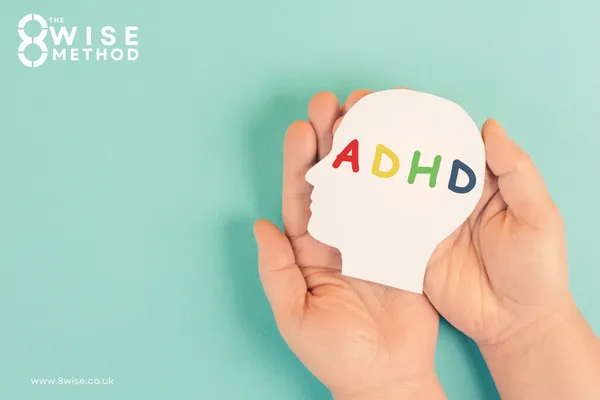
8Wise® for ADHD Diagnosis
By Kim Rutherford - Psychotherapist and Creator of the 8Wise® Method
When Life Changes
Receiving an ADHD diagnosis in adulthood is often a moment of profound clarity, but it also brings a unique set of pressures as you re-evaluate your past and adjust your future. For many, it is the end of a long search for answers—an explanation for a lifetime of feeling "different," "inconsistent," or "scattered."
However, the diagnosis itself is a major life transition. It triggers a "re-watching" of your life through a new lens, which can be both validating and emotionally exhausting. You are suddenly tasked with navigating medical systems, potentially starting medication, and learning to implement new strategies for executive functioning while still managing existing work and family commitments.
Understanding that an ADHD diagnosis is a total life transition is key to moving past the initial overwhelm and building a lifestyle that actually works for your brain.
Why This Life Event Creates Pressure
The primary pressure of a late-stage ADHD diagnosis is the cognitive load of "re-learning" yourself. You are moving from a world where you fought against your brain to one where you must learn to work with it. This transition requires significant mental energy as you identify which habits were survival-based coping mechanisms and which are your authentic traits.
There is also emotional pressure. Many adults experience a "grief cycle" after diagnosis—grieving for the person they might have been if they had known sooner. This can lead to temporary fluctuations in confidence and a sense of frustration with past struggles, often referred to as "diagnostic grief."
Finally, there is the pressure of adjustment. Implementing new structures in your home and professional life takes time and consistent effort. The "newness" of the diagnosis can feel like a constant background noise, making routine tasks feel momentarily heavier as you view them through your new understanding of neurodivergence.
"An ADHD diagnosis is not just a label; it is a manual for how your brain works. Understanding this allows you to stop fighting yourself and start building a life that supports your natural rhythms."
Looking at the Situation Through the 8Wise® Model
The 8Wise® Model helps you understand the impact of an ADHD diagnosis by looking at life through eight dimensions of wellness. This transition often affects several dimensions simultaneously:
Intellectual Wellness: Understanding how your brain processes information and identifying new focus strategies.
Environmental Wellness: Adjusting your physical space and daily routines to reduce sensory overwhelm and support concentration.
Emotional Wellness: Processing the "grief" of a late diagnosis and building self-compassion for past struggles.
Occupational Wellness: Exploring workplace adjustments or "reasonable accommodations" that allow you to thrive professionally.
Social Wellness: Re-evaluating how you communicate your needs to friends and family.
Seen through this wider perspective, a diagnosis is a multi-dimensional life event. Recognising this helps you move from "information overload" toward a more structured way of addressing the different areas of pressure.
When Pressure Builds Faster Than Capacity
One of the central ideas behind the 8Wise® Method is the relationship between life pressure and personal capacity. A new diagnosis can temporarily flood your "pressure" scale.
The constant research, medical appointments, and internal reflection can drain your mental capacity, leaving you feeling overwhelmed by even small tasks. If the pressure of the transition builds faster than your capacity to manage it, your executive functions (like planning and emotional regulation) can feel even more strained than usual.
Instead of asking “Why is this so hard?”, a more helpful question becomes: “How can I support my capacity while I navigate this new understanding of myself?”.
A Few Questions to Reflect On
If you have recently received an ADHD diagnosis, pause and reflect on these questions:
What is one area of your daily routine that feels most "cluttered" or difficult to manage right now?
What is one thing you would have told your "pre-diagnosis" self if you had the chance?
How can you adjust your physical environment today to better support your focus?
These reflections are about breaking the transition down into manageable parts and reducing the sense of internal chaos.
Practical Ways to Manage the Situation
Managing a new diagnosis effectively involves patience and radical self-compassion. Start by "editing" your environment, remove the friction points that trigger executive dysfunction. This might mean using visual reminders, body doubling, or simplifying your workspace.
Communicate your needs early. You don't need to have all the answers yet, but letting employers or partners know you are in a "period of adjustment" can lower the social pressure to perform in neurotypical ways.
Finally, remember that your diagnosis is a tool, not a limit. It provides the framework you need to stop over-stretching your capacity and start building a life that values your strengths while supporting your challenges.
Where 8Wise Can Help
The 8Wise® Method provides a framework to help you navigate the complexities of neurodivergence. By identifying which dimensions of your life are being most affected by your ADHD symptoms, you can take small, targeted steps to manage the pressure and support your wellbeing.
This holistic approach ensures that you are protecting your capacity while you work toward a life of greater clarity and focus.
What Psychology Research Tells Us
Research into adult ADHD (Barkley, 2015) suggests that diagnosis often leads to a significant reduction in self-stigma and an improvement in psychological wellbeing once appropriate strategies are implemented. The 8Wise® approach supports this by providing a holistic framework to manage the transition across all life dimensions, ensuring that the individual is supported beyond just clinical symptoms.
Start With the 8Wise® Assessment
If you are currently navigating a new diagnosis or a challenging life situation, the best place to begin is the 8Wise® Assessment. The assessment helps you step back and understand how the pressures you are experiencing may be affecting different areas of your life.